Article At A Glance: A Cybersecurity Firm Nearly Fell for Its Own Enemy
- A C-level executive at Outpost24 was targeted by a sophisticated 7-stage phishing attack that bypassed multiple layers of enterprise email security without triggering a single alert.
- Attackers used the Kratos phishing-as-a-service kit to orchestrate a complex redirect chain leveraging trusted brands like Cisco and JP Morgan — showing how low the barrier to entry has become for launching advanced phishing campaigns.
- The attack used a DKIM-signed email, compromised servers, and Cloudflare-protected pages to evade automated detection at every step — keep reading to find out exactly how each stage worked.
- The attack ultimately failed because Outpost24’s own threat intelligence unit detected and analyzed the campaign before any damage occurred.
- Outpost24 specializes in offensive security and threat intelligence, making it both an ironic and high-value target for credential harvesting operations.
Even the companies building the defenses are targets — and this attack on Outpost24 proves that no organization is off the threat actor’s list.
Even Security Firms Get Targeted — Here’s What Happened to Outpost24
In a striking example of attackers going after the defenders themselves, a C-level executive at cybersecurity firm Outpost24 was targeted in a precision phishing campaign engineered to bypass enterprise-grade email security. The attack was sophisticated enough that it passed through multiple security checkpoints without raising a single automated flag. What made it particularly alarming wasn’t just the target — it was the method.
Researchers at Outpost24’s own threat intelligence unit were the ones who caught it. After detecting and dissecting the campaign, they revealed a seven-stage redirect chain that used legitimate infrastructure, trusted brand names, and a commercially available phishing kit to build one of the most layered credential harvesting attempts documented in recent memory.
Why Cybersecurity Companies Are High-Value Phishing Targets
Security vendors sit at a unique intersection of high-value access and assumed trustworthiness. A compromised executive account at a firm like Outpost24 doesn’t just expose internal data — it can potentially open doors to client environments, threat intelligence feeds, vulnerability data, and partner systems. That makes cybersecurity firms extraordinarily attractive to threat actors looking for a single breach with cascading consequences.
There’s also a psychological element at play. Security professionals often carry a degree of confidence in their ability to spot threats, which sophisticated attackers actively exploit. Campaigns targeting this sector are frequently more polished, more technically layered, and harder to detect than average phishing attempts — precisely because the attackers know who they’re up against.
The C-Suite Executive Who Was in the Crosshairs
The target was a C-level executive at Outpost24’s parent company — a deliberate choice. Executives are consistently the most targeted employees in any organization because they carry the highest level of system access, authorization authority, and trust within business communications. A single compromised executive account can unlock password resets, financial approvals, and access to sensitive infrastructure.
What set this attack apart was that it wasn’t a spray-and-pray phishing blast. This was a targeted spear-phishing operation with a specific individual in mind, using contextually relevant lures and carefully constructed infrastructure designed to look completely legitimate to both the human recipient and the security tools scanning incoming emails.
The level of preparation involved tells us something critical about modern threat actors: they do their homework. Before launching, they identified the right target, selected appropriate brand lures, and assembled the technical infrastructure needed to get past defenses that would catch less polished attacks cold.
- Target profile: C-level executive at a cybersecurity company’s parent organization
- Attack type: Targeted spear-phishing with credential harvesting intent
- Lure brands used: JP Morgan and Cisco
- Phishing kit: Kratos phishing-as-a-service
- Outcome: Detected and stopped by Outpost24’s threat intelligence unit before damage occurred
The Attack Started With a Fake JP Morgan Email
The entry point of this attack was a phishing email crafted to impersonate JP Morgan — one of the most recognized financial institutions in the world. Choosing a brand of this scale wasn’t accidental. JP Morgan’s name carries immediate authority, and a C-suite executive receiving a communication that appears to come from a major financial institution is far less likely to question its legitimacy than a message from an unknown sender.
What made this email particularly dangerous wasn’t just the branding — it was the technical construction. The email was DKIM-signed, meaning it carried a cryptographic authentication stamp that told receiving mail servers the message was legitimate. Most enterprise email security platforms rely heavily on DKIM validation as a trust signal, which is exactly why the attackers ensured the email passed that check.
Hector Garcia, senior threat intelligence analyst at Outpost24, confirmed that the attackers appear to have used the Kratos phishing-as-a-service kit to execute the campaign. This is significant because it means the level of sophistication on display here isn’t exclusive to nation-state actors or elite hacking groups — it’s available as a packaged service to virtually any threat actor willing to pay for it.
How the Email Was Made to Look Like an Active Conversation
The email wasn’t presented as a cold outreach. Instead, it was structured to appear as part of an ongoing thread, a technique known as thread hijacking or conversation injection. By mimicking the format of a reply or forward, the message reduces the recipient’s instinct to scrutinize it — it looks like context they should already have, not a new suspicious request arriving out of nowhere.
Why the DKIM Signature Made It Pass Security Checks
DKIM, which stands for DomainKeys Identified Mail, is an email authentication protocol that uses a digital signature to verify that an email was sent from an authorized server for a given domain. When an email passes DKIM validation, it signals to mail servers and security platforms that the sender is who they claim to be.
The attackers exploited this by routing the email through infrastructure that could produce a valid DKIM signature — specifically Amazon Simple Email Service (SES). Because Amazon SES is a widely trusted sending platform used by thousands of legitimate businesses, emails sent through it carry a built-in reputation advantage that made the phishing email appear clean to automated filters.
How Amazon Simple Email Service Infrastructure Was Exploited
Amazon SES was leveraged as the sending backbone for the initial phishing email. By using Amazon’s own infrastructure to send the message, the attackers effectively borrowed Amazon’s sending reputation. Email security tools that evaluate sender IP reputation, domain reputation, and authentication records would see a DKIM-validated message originating from a trusted Amazon IP address — and pass it through without flagging it as suspicious.
This is a well-documented abuse vector. Legitimate cloud email services like Amazon SES, SendGrid, and similar platforms are frequently misused by threat actors because the trust those platforms have built into global email filtering systems becomes a weapon. It’s not a flaw in Amazon’s platform — it’s an abuse of reputation that highlights why authentication alone isn’t sufficient as a defense.
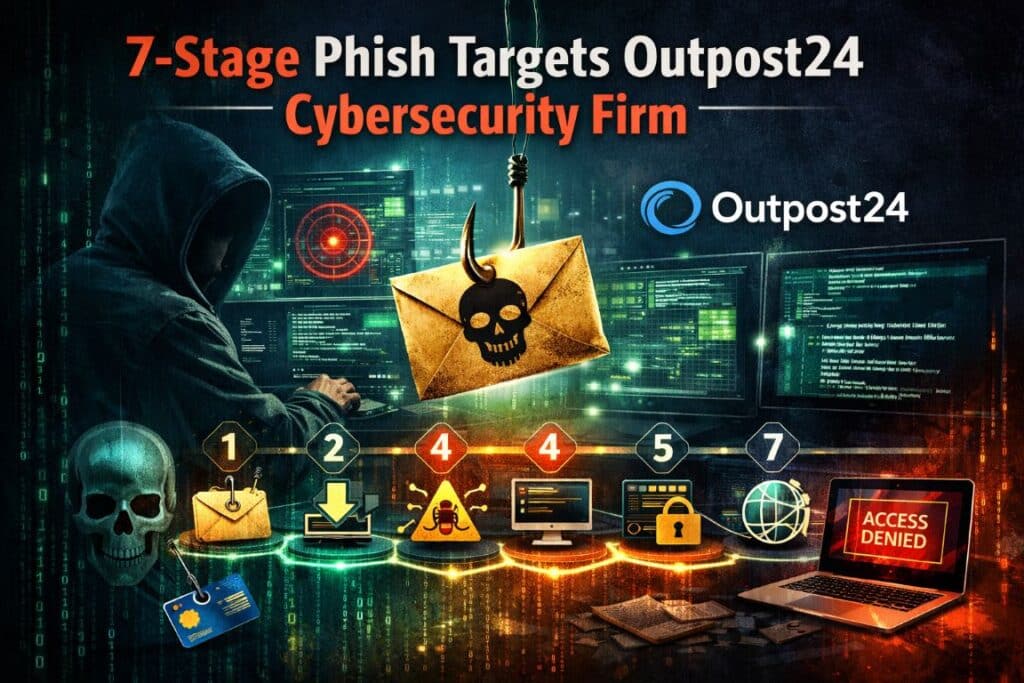
The 7-Stage Redirect Chain, Step by Step
Once the email landed in the target’s inbox, the real architecture of the attack revealed itself. Rather than linking directly to a phishing page — which would be quickly flagged and blacklisted by threat intelligence feeds — the attackers built a seven-stage redirect chain. Each stage served a specific purpose: adding legitimacy, bypassing a specific security control, or filtering out automated scanners that might expose the final destination.
This kind of layered redirect infrastructure is a hallmark of sophisticated phishing-as-a-service operations. It makes the attack extraordinarily difficult to analyze in real time because by the time a security tool tries to follow the chain, it may hit a stage that serves a benign page to non-human traffic — hiding the malicious payload entirely. The Kratos kit appears purpose-built for exactly this kind of evasion.
Understanding each stage individually is the most effective way to recognize and defend against this architecture in the wild. Here’s how the chain was constructed.
1. The Initial Phishing Email Lure
Stage one was the JP Morgan-branded email itself — DKIM-signed, routed through Amazon SES, and formatted to appear as a legitimate ongoing communication. The embedded link in the email was the entry point to the redirect chain, and clicking it set the entire seven-stage sequence in motion. To the recipient, it appeared to be a standard link associated with a trusted financial institution.
2. First Redirect Through a Trusted Domain
The first redirect leveraged a legitimate, trusted domain to forward the victim’s browser toward the next stage. Using trusted domains as the first hop in a redirect chain is a deliberate tactic — many email security tools perform URL scanning at the time of click, and a link that initially resolves to a known-good domain will often pass that check without triggering an alert. The redirect happens too fast for the user to notice, and too seamlessly for many tools to catch in real time.
3. Cisco’s Brand Used to Add Legitimacy
At stage three, the redirect chain passed through infrastructure that leveraged Cisco’s brand identity. Cisco is one of the most recognized names in enterprise networking and security, and its domains carry significant trust weight with both human recipients and automated security tools. By routing through Cisco-associated infrastructure — or spoofing it effectively enough to appear legitimate — the attackers added another layer of credibility to a chain that was designed to look like normal enterprise traffic at every single hop.
4. Compromised Server Routing
Stage four introduced a compromised third-party server into the chain. This is where the attack shifted from borrowed legitimacy to active infrastructure abuse. A previously legitimate server — likely belonging to an unrelated organization that had been silently compromised — was used as a relay point. Because the server had an established clean reputation, traffic passing through it wouldn’t trigger reputation-based blocking systems.
This stage also serves a forensic obfuscation purpose. When incident responders try to trace a phishing campaign backward through its infrastructure, hitting a compromised third-party server creates a dead end. The actual threat actors are one more layer removed, and the organization whose server was hijacked becomes an unwitting participant in the attack chain — often with no knowledge that their infrastructure was involved at all.
5. Cloudflare-Protected Phishing Infrastructure
By stage five, the redirect chain had reached infrastructure protected by Cloudflare. This is a particularly effective evasion technique because Cloudflare’s services — including DDoS protection, IP masking, and traffic proxying — are used by millions of legitimate websites globally. When a security tool tries to probe or scan a Cloudflare-protected URL, it often can’t resolve the true origin IP address, making takedown efforts significantly slower and more complicated.
Cloudflare protection also means the phishing page benefits from HTTPS encryption and a valid SSL certificate, which displays the padlock icon in a browser’s address bar. Many users still equate that padlock with safety. In reality, it only confirms the connection is encrypted — it says nothing about whether the destination is malicious. Attackers know this, and they exploit that misunderstanding deliberately.
6. Human Verification Filter to Bypass Automated Scanners
Stage six was one of the most technically telling parts of the entire chain. Before allowing any visitor to reach the final phishing page, the infrastructure deployed a human verification challenge — essentially a filter designed to distinguish between a real human clicking a link and an automated security scanner crawling URLs to check for malicious content.
This kind of filter is a direct countermeasure against sandboxing and automated threat analysis tools. Many enterprise email security platforms detonate links in isolated environments to assess whether the destination is malicious. A human verification gate — whether it’s a CAPTCHA, a JavaScript challenge, or a browser fingerprinting check — can identify non-human traffic and serve it a completely benign page, hiding the malicious payload entirely from the scanner.
The practical effect is devastating for automated defenses. A security tool scans the link, receives a clean page, marks the URL as safe, and the email lands in the inbox unblocked. When the actual human target clicks the same link, the filter recognizes the real browser environment and waves them through to the credential harvesting page.
How the Human Verification Filter Works Against Security Tools:
Visitor Type What the Filter Detects What Gets Served Automated security scanner Headless browser, no JS execution, datacenter IP Benign decoy page — attack stays hidden Threat intelligence crawler Known crawler user-agent or IP range Redirect to legitimate site or 404 error Real human target Normal browser fingerprint, residential IP Credential phishing page loads as intended Security researcher VPN or proxy IP, unusual timing patterns May serve decoy or block access entirely
7. The Final Microsoft Office Credential Harvesting Page
The end destination of the seven-stage chain was a Microsoft Office-branded credential phishing page — a fake login portal designed to capture the executive’s username and password. Microsoft Office was the logical choice of lure because it’s the dominant productivity suite in enterprise environments globally. A prompt to re-authenticate to Microsoft 365 or verify account access is something most executives encounter regularly, making it one of the least suspicious requests an attacker could present at the end of an elaborate chain.
Once credentials were entered on this page, they would be silently exfiltrated to the attackers’ collection infrastructure. With a valid Microsoft 365 login for a C-level executive at a cybersecurity firm, the attackers would have had access to email, files, internal communications, and potentially connected third-party systems — all without triggering any alerts, because the login would appear to come from a legitimate user entering valid credentials.
How Phishing Kits Like Kratos Lower the Bar for Attackers
The Kratos phishing-as-a-service kit is what made this entire operation accessible. Phishing-as-a-service platforms package the technical complexity of building redirect chains, hosting phishing pages, managing DKIM signing, and evading automated scanners into ready-to-deploy toolkits that require minimal technical expertise to operate. What once required a skilled threat actor with deep knowledge of email infrastructure and evasion techniques can now be purchased, configured, and deployed by someone with a fraction of that skill set.
This commoditization of sophisticated attack tooling is one of the most significant shifts in the threat landscape over the past several years. The seven-stage infrastructure used against Outpost24 wasn’t necessarily built from scratch by a highly skilled individual operator — it was assembled using a service designed to make that level of complexity repeatable and scalable. Every organization that dismisses advanced phishing as a concern only for high-profile targets needs to reckon with the fact that this capability is now available to virtually anyone with a motive and a budget.
Why the Attack Failed — and What Caught It
Despite the technical sophistication of the campaign, the attack failed. The seven-stage chain, the DKIM-signed lure, the Cloudflare protection, the human verification filter — none of it was enough. What stopped it wasn’t a single security tool. It was human-driven threat intelligence operating with the kind of contextual awareness that automated systems alone can’t replicate.
How Outpost24’s Threat Intelligence Unit Detected the Campaign
Outpost24’s internal threat intelligence team identified and analyzed the attack after it was detected — before the targeted executive engaged with the phishing content. Hector Garcia, senior threat intelligence analyst at Outpost24, led the analysis that unraveled the full seven-stage chain and identified the Kratos kit as the likely toolset behind the campaign. The detection speaks directly to the value of having dedicated threat intelligence capabilities that go beyond passive monitoring — actively hunting for indicators of campaigns targeting your organization, your executives, and your sector.
What Would Have Happened if It Succeeded
A successful credential harvest from this attack would have been a significant security incident with consequences extending well beyond Outpost24 itself. With valid Microsoft 365 credentials for a C-level executive, attackers would have had authenticated access to email communications, calendar data, internal documents, and any cloud-connected systems tied to that account. From that foothold, lateral movement, business email compromise (BEC) fraud, or deeper network infiltration would all have been realistic next steps.
The implications for Outpost24’s clients and partners would also have been serious. A compromised executive account at a security vendor is a potential gateway into the environments that vendor services, monitors, or has access to. Attackers frequently use vendor compromises as a pivot point into more valuable downstream targets — making the successful execution of this attack potentially far more damaging than a typical enterprise credential theft.
What Every Business Can Learn From This Attack
The Outpost24 phishing campaign is a masterclass in how modern attacks are constructed — and a clear signal that the way most organizations think about phishing defense is dangerously outdated. Relying on email filters, DKIM validation, and URL scanning as your primary defense against credential phishing is no longer sufficient when attackers are specifically engineering their infrastructure to defeat each of those controls one stage at a time. The lesson here isn’t that your tools failed. It’s that the attackers studied your tools and built around them.
Why No Single Security Tool Is Enough
Every stage of the Outpost24 attack was designed to defeat a specific control. The DKIM signature defeated email authentication checks. The trusted domain redirect defeated URL reputation scanning. The Cloudflare-protected infrastructure defeated IP-based blocking. The human verification filter defeated sandbox detonation. No single tool in the security stack was ever designed to catch all seven stages simultaneously — and the attackers knew that.
This is the core problem with perimeter-focused, tool-dependent security models. When your defense strategy is built around individual controls working in isolation, a sufficiently motivated attacker only needs to understand your stack and build around it one layer at a time. The Outpost24 attack didn’t find a zero-day vulnerability. It didn’t exploit a software flaw. It exploited the gaps between your tools — and those gaps exist in nearly every organization.
Zero-Trust Principles That Would Have Stopped This Attack Cold
A zero-trust architecture operates on one foundational assumption: no user, device, or session should be trusted by default, regardless of where the access request originates. Under a mature zero-trust model, even a valid Microsoft 365 login from a C-level executive would trigger additional verification if the login context was anomalous — wrong location, unrecognized device, unusual access time, or behavioral deviation from baseline. The stolen credential alone would not have been sufficient to grant access. This is precisely the kind of layered verification that would have neutralized the end goal of the Outpost24 phishing chain even if the credential had been successfully harvested.
The Role of Human Risk Management in Catching What Machines Miss
The Outpost24 attack was ultimately stopped by people — specifically, a threat intelligence team that was actively hunting rather than passively monitoring. This distinction matters enormously. Passive monitoring waits for alerts. Active threat hunting goes looking for campaigns, precursors, and infrastructure that automated systems haven’t yet flagged. The human verification stage in this attack was specifically designed to blind automated tools, which means human analysis was the only reliable path to detection.
Human risk management also addresses the other side of the equation: the target. Security awareness training that goes beyond checkbox compliance — training that teaches executives specifically how spear-phishing campaigns are structured, how redirect chains work, and why a padlock in a browser bar doesn’t mean a page is safe — creates a second layer of human detection that no phishing kit is designed to bypass. When the machine and the human are both trained to look for the same things, the attack surface shrinks dramatically.
Phishing Is Getting Smarter — Your Defenses Need to Match
The seven-stage attack on Outpost24 isn’t an outlier — it’s a preview. Phishing-as-a-service kits like Kratos are making this level of technical sophistication accessible to a growing pool of threat actors, and the targets aren’t limited to financial institutions or government agencies. If a cybersecurity firm’s C-suite is in the crosshairs, so is yours. Layered redirect chains, DKIM-signed lures, human verification filters, and Cloudflare-protected harvesting pages are now table-stakes for well-resourced phishing campaigns. Matching that sophistication means combining zero-trust access controls, active threat hunting, executive-targeted security awareness programs, and continuous threat intelligence — not as separate initiatives, but as an integrated defense posture built on the assumption that the next attack is already in your inbox.
Frequently Asked Questions
The Outpost24 phishing attack raised a number of important technical questions that apply to any organization trying to understand and defend against modern credential phishing campaigns. The answers below cut through the jargon and explain the key concepts that made this attack possible — and what they mean for your security posture.
Understanding the mechanics behind each component of an attack like this one is the first step toward building defenses that don’t just react to threats, but anticipate how they’re constructed.
What is a redirect chain in a phishing attack?
A redirect chain is a series of sequential URL hops that automatically forward a victim’s browser from one destination to the next before landing on the final malicious page. Each hop in the chain typically serves a specific evasion purpose — borrowing the reputation of a trusted domain, routing through compromised infrastructure, or filtering out automated scanners before the payload is revealed.
In the Outpost24 attack, the redirect chain had seven stages. This means clicking the link in the initial phishing email triggered six automatic redirects before the Microsoft Office credential harvesting page was finally loaded. From the victim’s perspective, it appears nearly instantaneous. From a security analysis perspective, each additional hop adds complexity, delays takedown efforts, and gives the attackers more opportunities to hide the true destination from scanning tools.
What is DKIM and why can attackers abuse it?
DKIM stands for DomainKeys Identified Mail. It is an email authentication method that uses a cryptographic digital signature embedded in the email header to verify that the message was sent from an authorized mail server for the sending domain. When a receiving mail server validates a DKIM signature successfully, it treats that as a positive trust signal — evidence that the email is legitimate and hasn’t been tampered with in transit.
Attackers abuse DKIM by routing phishing emails through legitimate sending infrastructure — in this case, Amazon Simple Email Service — that can generate a valid DKIM signature on their behalf. Because the signature is technically valid, email security platforms that rely on DKIM as a primary trust indicator will pass the message through. The authentication check was never designed to evaluate the intent of the sender — only the technical validity of the signature. That gap is exactly what sophisticated phishing campaigns exploit.
What is the Kratos phishing kit?
Kratos is a phishing-as-a-service toolkit identified by Outpost24’s threat intelligence analysts as the likely platform behind this attack. Phishing-as-a-service kits package the technical infrastructure needed to run sophisticated phishing campaigns — including redirect chain management, phishing page templates, DKIM signing capabilities, human verification filters, and credential exfiltration — into a deployable service that requires minimal technical expertise to operate. Kratos represents the broader trend of attack capability commoditization, where techniques that once required advanced skills are now available as purchasable services, dramatically lowering the barrier to entry for threat actors who want to run high-sophistication campaigns against high-value targets.
Why are cybersecurity firms specifically targeted by hackers?
Cybersecurity firms are high-value targets for several compounding reasons. First, they typically have access to sensitive client environments, vulnerability data, threat intelligence feeds, and security infrastructure that extends well beyond their own organization. A single compromised account at a security vendor can serve as a pivot point into dozens of downstream client networks — making the potential return on a successful attack extraordinarily high relative to the effort invested.
Second, security vendors carry a degree of implicit trust within the organizations they serve. Communications, tools, and access originating from a trusted security partner are often subject to less scrutiny than those from unknown external parties. Attackers who successfully compromise a security firm don’t just gain access to that firm’s data — they inherit its trusted relationships, which can be weaponized for further attacks against clients and partners who would never expect a threat to arrive through a vendor they rely on for protection.
What is credential harvesting and how does it work?
Credential harvesting is the process of tricking a target into voluntarily entering their username and password into a fake login page that is designed to look identical to a legitimate service. The stolen credentials are then captured and transmitted to the attacker’s infrastructure in real time, often without the victim realizing anything unusual has occurred. The fake page typically redirects the victim to the real login page after capturing the credentials, creating the impression of a routine session timeout or authentication error.
In the Outpost24 attack, the harvesting page impersonated Microsoft Office — a deliberate choice because Microsoft 365 login prompts are something nearly every enterprise employee encounters daily. The familiarity of the interface reduces suspicion, and the urgency often implied by an authentication prompt encourages quick action rather than careful scrutiny.
The most effective defenses against credential harvesting combine phishing-resistant multi-factor authentication methods — such as FIDO2 hardware security keys — with zero-trust access policies that treat every login as potentially suspect regardless of whether the credentials themselves are valid. Harvested credentials become significantly less valuable when the authentication system requires proof of possession of a physical device that the attacker doesn’t have, and when anomalous login behavior triggers additional verification steps that a stolen password alone cannot satisfy. Outpost24’s threat intelligence platform is purpose-built to help organizations identify and respond to exactly these kinds of targeted campaigns before they reach their intended victims.